
Being trusted with someone else’s story: Midwife: The Documentary
Behind the making of a documentary about private midwifery in North Queensland, and what the work is reminding us about presence, trust and the value of real human storytelling.
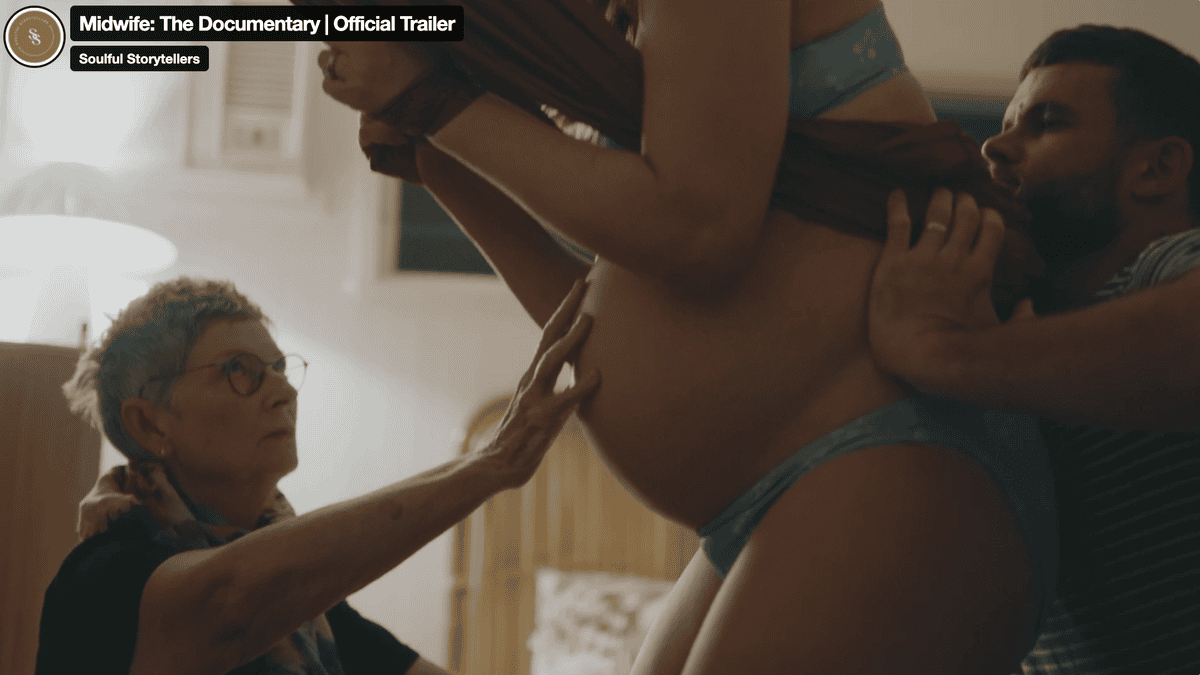
Midwife Georgina in action as featured in Midwife: The Documentary (Official Trailer)
Some projects begin with an idea of our own. Others begin when somebody brings us something that already matters deeply to them and asks us to help give it shape.
Midwife: The Documentary began with that kind of trust.
Produced by Georgina Bosworth of Mumma G Midwifery and filmed and edited by Dania Lauren, the documentary brings together the experiences of private midwives working across North Queensland, families who have chosen private midwifery care, and clinicians contributing perspectives from midwifery and obstetrics.
The full documentary is still in production, but this month we were finally able to share its first glimpse: the official trailer.
And, quite fittingly, its first audience was a room full of documentary storytellers.
“Beyond sharing the beginning of this particular film, the project has left us thinking about what documentary storytelling asks of us, and why those distinctly human parts of the craft still matter.”
Premiering the trailer at the Soulful Storytellers Film Festivale
We premiered the trailer during our 2026 Soulful Storytellers Film Festival before Georgina released it publicly alongside the people who have contributed to the documentary. Having the opportunity to share a sneak peek of this project, that Dania is still actively crafting, with our student and community members was very special for us.
Our Film Festival exists to gather around documentary work. Some of the films are made by storytellers finding their feet with video for the first time. Others come from experienced photographers and filmmakers refining their voice. The projects are different, but the conversations around them often come back to the same things: what we noticed, what we chose to leave in, what we left out, where the story changed, and why a particular moment stayed with us.
Since its public release, the trailer has gained significant moementumn. Midwives have shared it. Doulas and birth workers have forwarded it one another. Families have responded to it, and conversations have started around the experiences represented in the film. We’ve even witnessed this conversation-starting dynamic unfold within our own family.
Of course, it’s encouraging for us to see a project like this begin to have an impact.
But what interests us more is why people share stories in the first place.
Usually it isn't because every frame is perfect.
It is because something resonates. In a trailer like this there may be parts of the story being told that they identify with and recognicse as true. For others it may raise questions, or a desire to learn more.
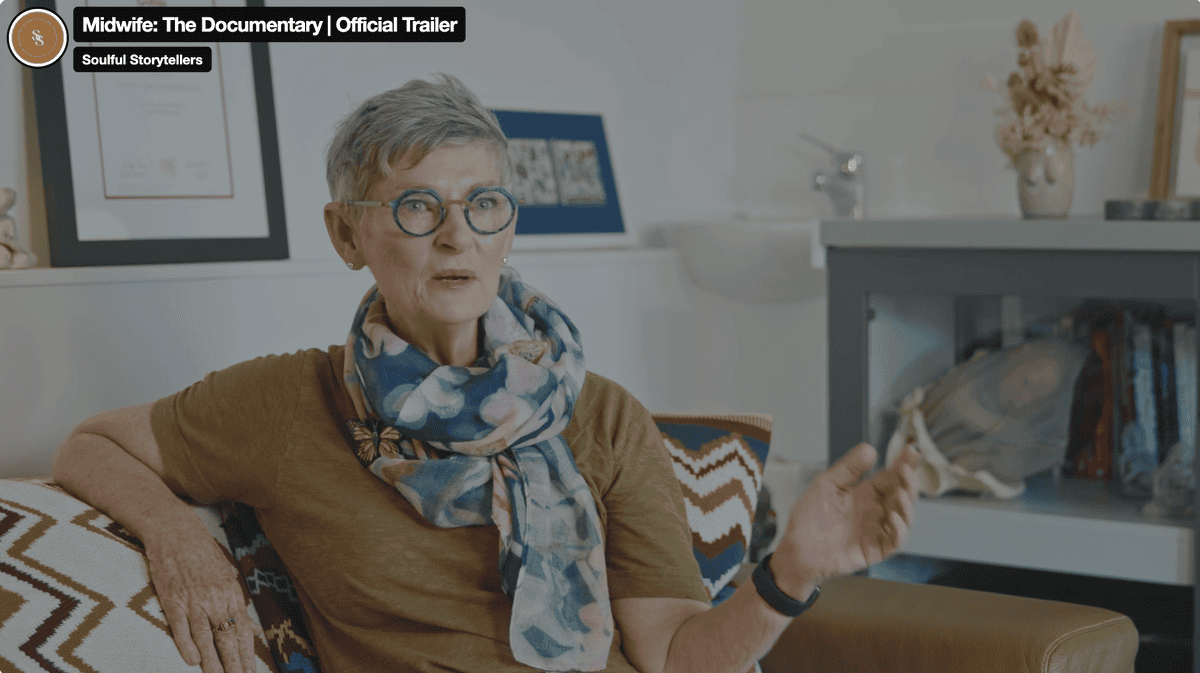
Screenshot of Georgina interview as featured in Midwife: The Documentary (Official Trailer)
Authentic documentary storytelling still requires someone to be there
It would be impossible to talk about working creatively in 2026 without acknowledging AI.
There are extraordinary tools appearing almost every week. Some can make our working lives easier. They can help organise information, speed up repetitive tasks and support parts of a creative workflow that used to take much longer.
For photographers and filmmakers, that can also create understandable questions and concerns:
Is there still a place for human storytellers when so much can now be generated, automated or recreated?
We think documentary projects like Midwife offer a fairly simple answer.
There is no shortcut for being there.
Someone still has to walk into the room. Someone has to listen long enough to understand what matters. Someone has to notice the glance that wasn't planned, hear the change in someone's voice, recognise when a question needs another question and know when putting the camera down might actually be the better choice.
A filmmaker needs to build enough trust for people to speak honestly in their presence.
And then they need to carry all of that into the edit without flattening those people into content.
AI can assist with parts of filmmaking. We use technology too. But authentic, feet-on-the-ground documentary storytelling begins long before a piece of software touches the footage.
For us, the growth of AI doesn't make that kind of craft feel less valuable.
If anything, it makes the difference easier to see.
And brands and organisations like Mumma G Midwifery are still choosing to invest in exactly that: a real person, in a real place, documenting real people and helping them tell something that not only deserve but require a human touch.
For birth photographers and emerging family filmmakers wondering whether there will still be a place for this work, we think that matters.
There is still a place for this craft
We know the creative landscape can feel unsetling at the moment.
It is incredibly easy to look at what AI can generate and wonder where that leaves photographers, filmmakers, editors and other people who have spent years learning a craft.
We don't think pretending those changes aren't happening is particularly useful.
But neither do we think the conclusion has to be that human storytelling is disappearing.
There will always be imagery whose purpose is simply to exist. There will be content that needs to be made quickly, cheaply or at scale, and increasingly sophisticated tools will be very good at making it.
Documentary work asks for something different.
It asks for access.
Presence.
Judgement.
Relationship.
Curiosity.
Trust.
And the ability to recognise a story while standing in the middle of one.
Those are skills worth learning.
For the birth photographer who wants to make films that feel like more than moving highlights, for the filmmaker who wants to document families with greater depth, or for the storyteller wondering whether there is still room to make work slowly and thoughtfully, we hope projects like this offer a little reassurance.
There are still people who value being genuinely seen.
There are still stories that have to be witnessed before they can be told.
And there are still people willing to commission filmmakers to do that work well.
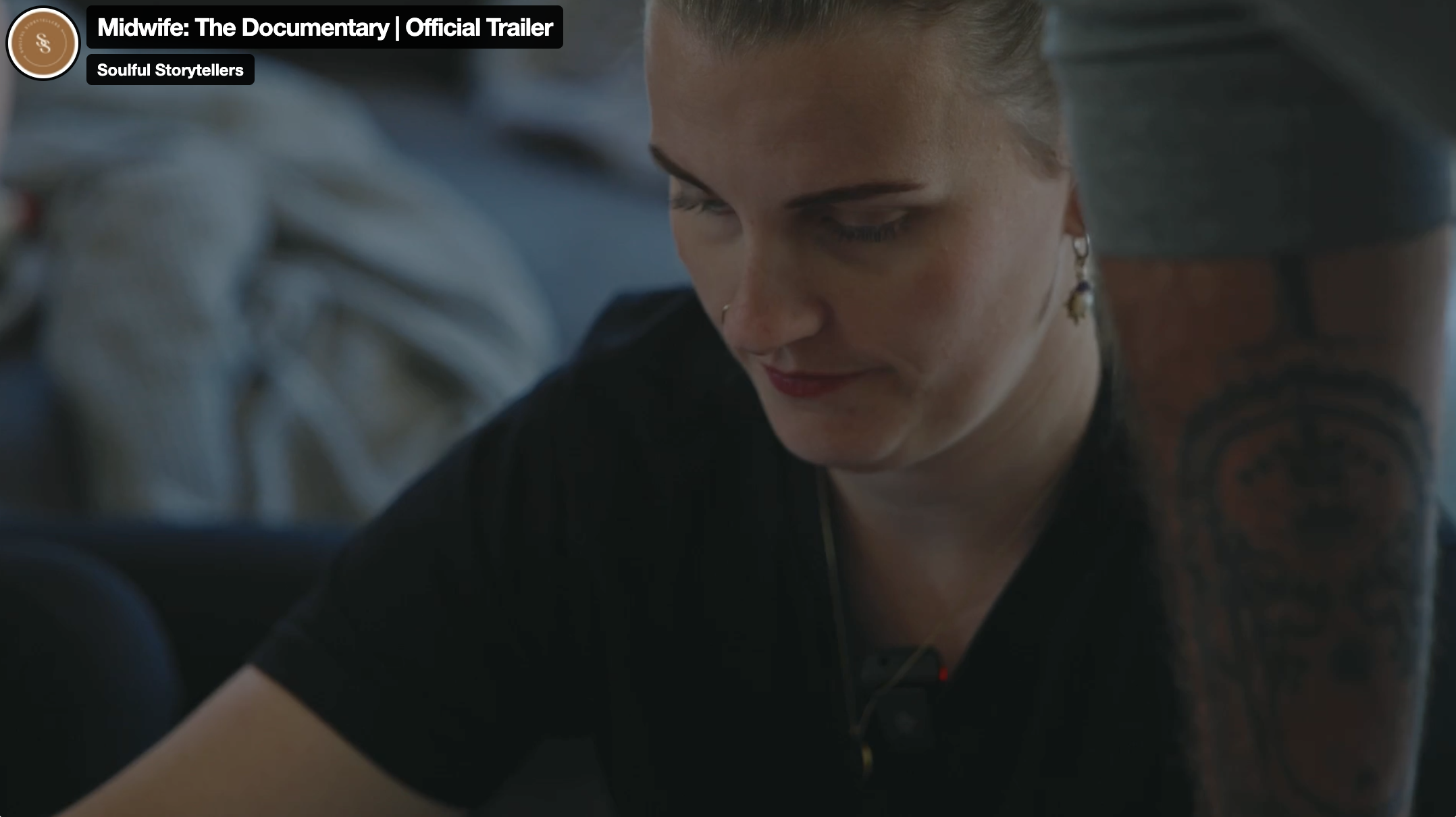
Midwife Rachael in action as featured in Midwife: The Documentary (Official Trailer)
The camera is only a small part of documentary filmmaking
When photographers begin moving into birth videography or family filmmaking, it is natural to focus heavily on the technical side.
Which settings should I use?
How do I keep footage steady?
How do I record clean audio?
Which lenses work best?
How do I edit everything together?
Those skills matter. There is no escaping the fundamentals.
But one of the things larger documentary projects keep reinforcing for us is that knowing how to operate a camera is only a small part of being able to tell a story.
There have been hours of listening throughout this project. Interviews that began in one place that led to filming somewhere else. Ideas that repeated across completely separate conversations. Perspectives that intersected in some places and sat uncomfortably beside one another in others.
Eventually all of those interviews, observations, sounds, scenes and seemingly insignificant moments arrive in the edit. And the work changes again.
You are no longer asking, Did I capture enough footage?
You are asking, What is the heart of the story?
That is the question underneath so much documentary filmmaking, whether you are making a feature documentary, a five-minute birth film or a quiet family film about an ordinary Saturday at home.
Finding the story inside documentary footage
This is one of the questions we spend a lot of time exploring with filmmakers inside Soulful Storytellers.
Our answer isn't a formula.
You start by paying attention.
Sometimes the story announces itself while you are filming. Sometimes you think you understand it and discover during the edit that you were watching something completely different.
You begin listening for what keeps returning. A phrase. A tension. A relationship. A change of plans. An unanswered question.
Something that seemed insignificant when you filmed it but suddenly carries enormous weight beside something somebody says later.
Then you begin making connections. Not inventing connections because they would make the film more dramatic. Finding the ones that were already there.
That distinction matters to us.
Storytelling isn't taking a collection of beautiful footage and finding a clever way to make it emotional.
It is learning to recognise what was meaningful in the first place.
Story over coverage
One of the ideas we come back to again and again inside Soulful Storytellers is learning to think in story rather than coverage.
A project like this stretches that idea considerably. There is simply too much material to treat documentary filmmaking as an exercise in collecting everything. At some point you have to recognise patterns, relationships, tension and change. You have to work out what the story is asking you to pay attention to.
We wrote about that shift more fully in Think in Story, Not Coverage. On Midwife, we're getting to practise it on a much larger scale.
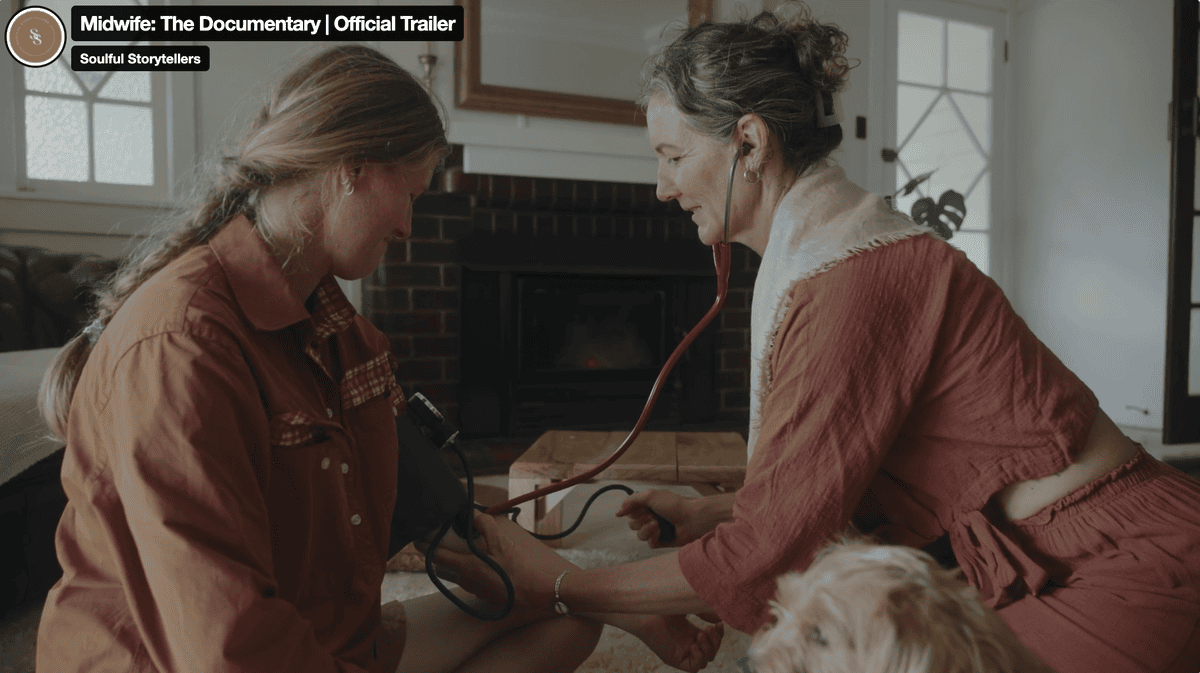
Midwife Tanya working with a birth client as featured in Midwife: The Documentary (Official Trailer)
Editing real stories comes with responsibility
The edit carries a particular responsibility when real people have entrusted you with their experiences.
As filmmakers, we have an enormous amount of power once the footage reaches the timeline.
We can shorten a pause and change the feeling of an answer. We can choose the reaction a viewer sees. We can move one sentence beside another, add music underneath it or remove the ambient sound that surrounded it.
Every one of those decisions shapes the way an audience experiences a person and their story.
This is why we talk so much about intentional editing inside our documentary filmmaking courses.
Yes, we talk about structure, pacing, music, ambient audio, sound design and emotional flow. Those things can transform an edit.
But good documentary storytelling also requires restraint.
Sometimes a scene needs music.
Sometimes hearing nothing but the room is more powerful.
Sometimes another cut improves the story.
Sometimes the strongest decision is to stay exactly where you are for another five seconds.
There isn't an editing preset that can make those decisions for you, because they depend on understanding the people and the story in front of you.
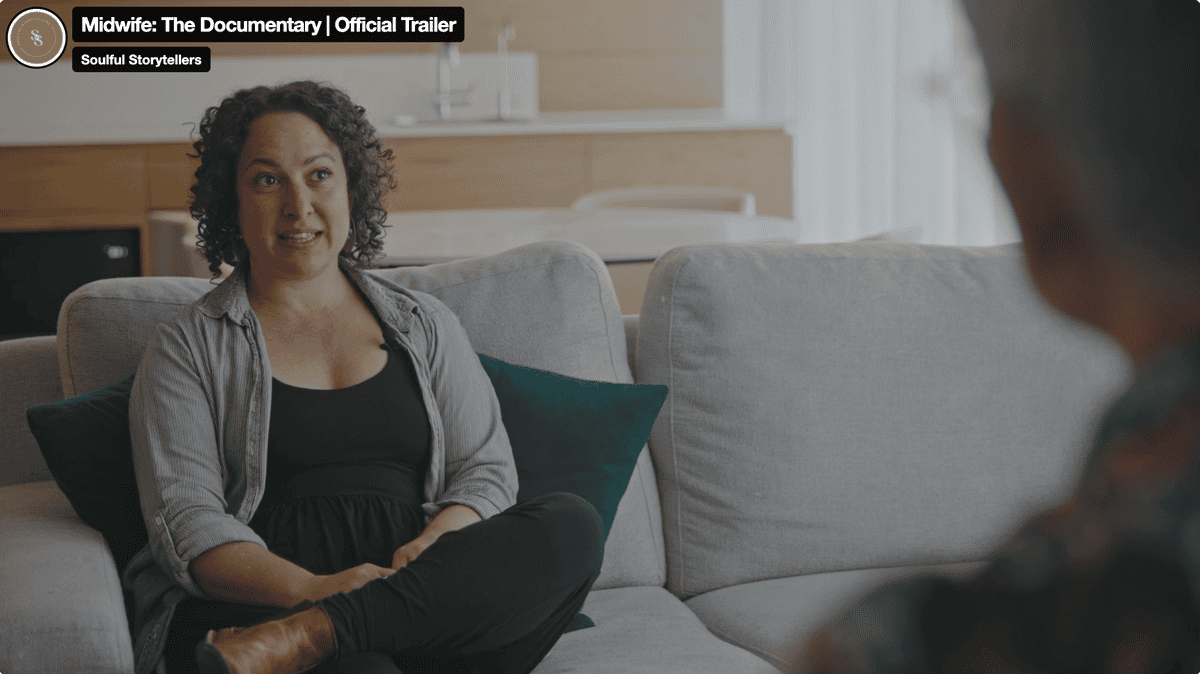
Interview with Melanie the midwife as featured in Midwife: The Documentary (Official Trailer)
What can birth photographers learn from documentary filmmaking?
Birth photographers already understand more about documentary filmmaking than they may realise. We work with real events we cannot repeat, changing light, genuine emotion and moments that rarely happen exactly where we expected them to.
What changes when we begin working in film is that we also have to think about time, sequence, sound and what happened on either side of the moment.
We've written more about that shift in our guide to documentary birth videography, but projects like Midwife continually remind us that the instinct underneath it all is the same: notice what is really happening before deciding how to capture it
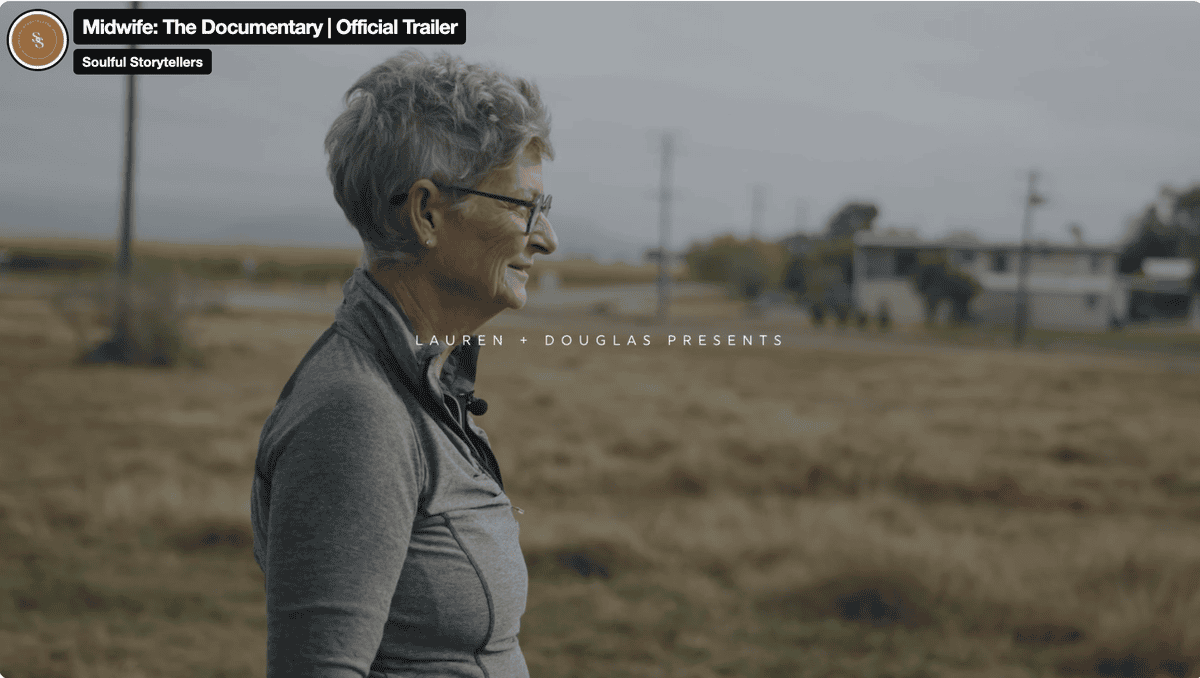
Georgina at home in Rural North Queensland as featured in Midwife: The Documentary (Official Trailer)
Still doing the work ourselves
Andrew and I have always wanted Soulful Storytellers to feel closer to an in-person, hands-on apprenticeship-type experience rather than an online course.
Part of that means continuing to make films ourselves.
We don't want to reach a point where we are only teaching what we once did.
We are still filming. Still editing. Still sitting with stories that refuse to fit neatly where we initially thought they would. Still questioning choices and changing our minds. Still occasionally watching something back and knowing exactly what we would do differently next time.
Midwife: The Documentary is part of that ongoing practice.
What Dania is learning while making it doesn't sit separately from Soulful Storytellers. Those experiences find their way back into conversations about interviews, story structure, sound, editing, client relationships, ethics and all the hundreds of small decisions that eventually become a film.
As we begin looking towards our 2027 intake, that feels particularly important.
We aren't interested in teaching documentary filmmaking from a distance.
We want to keep doing the work alongside the people we teach.
For now, though, Midwife belongs to Georgina and to the midwives, families and clinicians who have trusted this project with their experiences.
We're grateful to be able to share the beginning of this journey with you.
If you're exploring documentary filmmaking yourself, you might like to begin with our guide to documentary birth videography, or read more about why we encourage filmmakers to think in story, not coverage.
Both go a little deeper into the ideas that sit underneath this work: learning to notice what matters, moving beyond simply collecting beautiful footage, and beginning to shape films around story.
Your Invitation
If you've been looking for more than information—if you're searching for guidance, creative community, and a place to deepen your storytelling craft—we'd love to welcome you into the Soulful Storytellers world.
Explore our apprenticeship pathways or join the VIP list to receive invitations to future community events, screenings, Film Festival updates, and upcoming enrolment opportunities.
Join the Soulful Storytellers VIP List for filmmaking tips, exclusive discounts and priority access to course launches, intakes and exclusive discounts.
A welcoming space for photographers ready to deepen their storytelling craft.
Written by Dania Lauren, award-winning birth filmmaker, storytelling educator, and co-creator of Soulful Storytellers, a creative community for photographers and filmmakers looking to elevate their storytelling craft. Through her studio, Lauren + Douglas, Dania creates emotive, documentary-style films for families and brands who value stories that feel as meaningful as they look.
