
Transition from Photography to Birth Videography: A Step-by-Step Roadmap
A practical roadmap for photographers ready to begin filming meaningful birth stories.
If you're still exploring whether birth videography is the right path for you, begin with our guide to How to Become a Birth Videographer, where we explore the mindset, skills, and storytelling principles behind documentary birth filmmaking. This article focuses on what comes next: the practical steps involved in moving from photography into film.
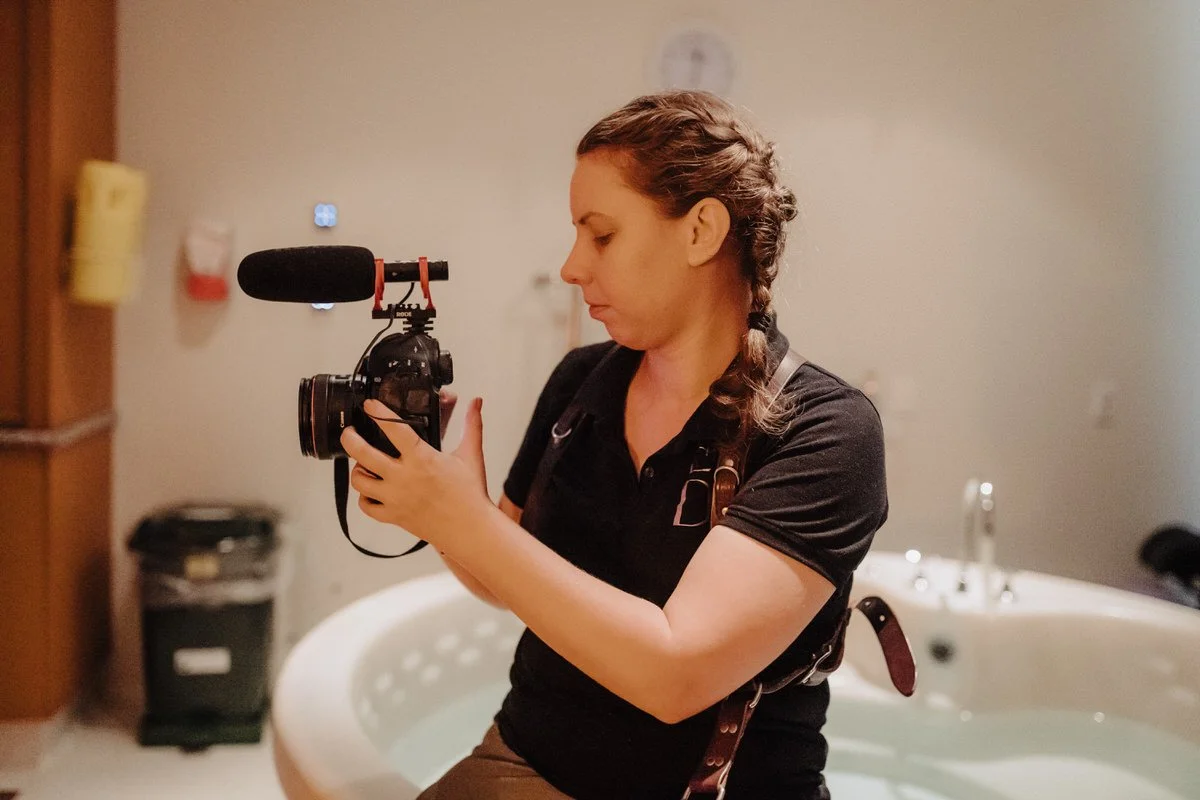
You already have the eye — now it’s time bring your stories to life!
Step 1: Reframe What Filmmaking Really Is
If you’ve ever looked through your viewfinder and felt that quiet pull to go deeper.
Many birth photographers reach a point where stills no longer feel like enough — when you crave the motion, sound, and heartbeat behind each image.
But making that leap from photography to videography can feel intimidating. You might worry about gear, editing, workflow, or finding time to fit it all in. Maybe you’ve gone to bed thinking about galleries waiting to be edited or found yourself wishing for more creative direction.
Here’s the truth: videography isn’t a different language — it’s storytelling in motion.
You already have the eye, intuition, and empathy. Now it’s about shifting how you think, not starting from scratch.
“Courage comes before clarity. Always.”
Step 2: Develop a Filmmaker's Mindset
Transitioning from stills to video starts with mindset — not gear.
From capturing moments → crafting flow
You already know how to freeze emotion. Now, focus on following it — the rhythm of contractions, the rise and fall of breath, the subtle details and interactions that bring birth films to life.
From posing → observing
You don’t need to direct; you need to witness. Your gift as a birth photographer is presence — keep that. Let it stretch into multiple senses and dimensions!
From gear perfection → story emotion
You don’t need the fanciest setup to tell something powerful. Don’t let technical fear silence your instinct. Story and emotion will always outshine specs and lenses.
For many photographers, the biggest shift isn't technical at all. It's learning to think in sequences rather than single frames and becoming comfortable allowing moments to unfold naturally. We explore this creative transition more deeply in From Still to Soul-Stirring, where we look at what changes when storytelling begins to move beyond still images and into motion.
“Technique builds skill. Empathy builds art.”
Step 3: Learn the Technical Foundations
Start small. Start simple.
Start with what you have — not what you wish you had.
Camera settings
Learn your frame rates and shutter speed (for 24fps, aim for 1/50). Manual focus and exposure become your new best friends.
Audio
Birth storytelling lives in sound — the whispered encouragement, nervous laughter, quiet conversations, and moments of silence that often carry as much emotional weight as the visuals themselves. Learning to work confidently with audio is one of the most important steps in becoming a birth filmmaker. In Capturing Sound in the Birth Space, we explore simple ways to approach audio without feeling overwhelmed by the technical side of the craft.
Editing
It's not about stitching clips together — it's about shaping emotion. Begin by feeling your way through pacing, story flow, and music before worrying about perfection.
The hardest part isn't the software. It's learning to see movement instead of moments. Once you begin to understand that shift, everything else starts to build upon it.
As your confidence grows, you'll naturally become more curious about equipment. The good news is that most photographers already own much of what they need to begin. If you're exploring cameras, audio solutions, or editing tools, our Gear Guide for Birth Videographers can help you make informed decisions without becoming distracted by unnecessary upgrades.
Step 4: See What Progress Looks Like
Sometimes, confidence doesn’t come from perfection — it comes from trying, learning, and telling the story anyway.
When Melanie Lopez joined our SSBV Signature pathway, she was a birth photographer who wanted to bring her stories to life through film. Just a few months later, she created her first birth video — “Happy New Year’s Evie.”
“My first birth to film was a whirlwind — baby arrived just 10 minutes after I got there! Thanks to the foundations in SSBV, I stayed calm and captured beautiful, usable footage. I honestly don’t think I could have done it without this course — it gave me the skills and confidence to film a real birth and problem solve unexpected challenges that came along the way.”
— Melanie Lopez
Despite the rush and pressure of a ten-minute arrival, Melanie was able to apply the foundations she had learnt through her SSBV apprenticeship experience to create a heartfelt film that moved our whole community.


Watch Melanie’s film and hear her story → The Birth of Evie | SSBV25 Film Festival Replay
Step 5: Introduce Film Into Your Business
As you blend photography and film, your message matters. Here’s where to start:
Share your “why.” Be open about why you’re adding video — not as a replacement, but an expansion of your craft.
Use language clients understand. Talk about “short keepsake films” or “moving birth stories.” Clients feel the difference.
Offer simple add-ons first. A 1–2 minute keepsake film helps your clients experience the value before you overhaul your packages.
Show, don’t just tell. Post snippets, sounds, and emotions — not just highlight reels.
You’re not reinventing yourself. You’re deepening your artistry.
For many photographers, the transition into film becomes more than a new service offering. It creates opportunities to deepen client relationships, refine their creative identity, and build a more sustainable storytelling business. We share several examples of this journey in How Our Students Are Using Birth Videography to Elevate Their Creative Business, where graduates reflect on how filmmaking has shaped both their work and the way they serve families.
Step 6: Keep Building Your Craft
The transition from photography to birth videography rarely happens all at once. Most storytellers build confidence one project, one lesson, and one film at a time.
If you're looking for a broader introduction to documentary birth filmmaking, continue with our guide to How to Become a Birth Videographer. And when you're ready to deepen your craft, explore the Soulful Storytellers apprenticeship pathways designed to support photographers as they move from still images into meaningful documentary storytelling.
Join the Soulful Storytellers VIP List for filmmaking tips, exclusive discounts and priority access to course launches, intakes and exclusive discounts. A welcoming space for photographers ready to deepen their storytelling craft.
Written by Dania Lauren and Andrew Douglas, co-founders of Soulful Storytellers. Through their filmmaking work at Lauren + Douglas and years spent mentoring storytellers around the world, they are passionate about helping photographers and filmmakers discover their creative voice and create documentary films that honour real stories through authenticity, craftsmanship, and human connection.
